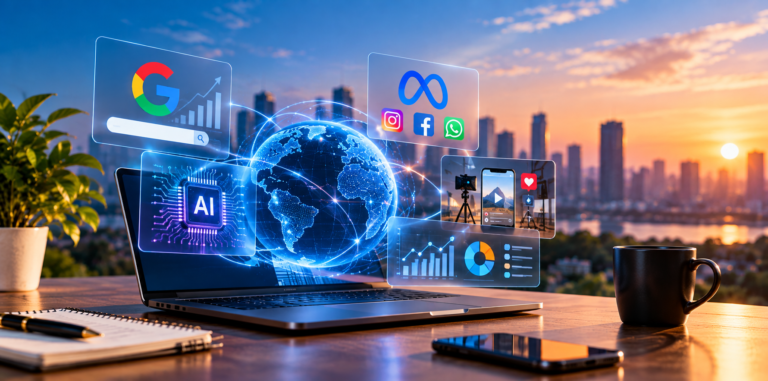
Meta One combines higher AI usage with professional tools for creators and businesses, expanding social platforms into a broader AI-assisted business workspace.
Meta has introduced Meta One, a subscription service that combines higher AI usage with additional features for individuals, creators and businesses across its apps. The September 2026 launch reflects a broader shift in social platforms: AI is increasingly becoming part of the professional toolkit used to create content, understand audiences and communicate with customers.
What Meta One includes
Meta says Meta One is launching with more than 50 features across Instagram, Facebook, WhatsApp and Meta AI, with plans to expand into Edits, AI glasses and other experiences. The core versions of Meta’s apps and Meta AI remain free, while subscriptions provide additional capabilities and higher usage limits.
The service is structured across several levels. Individual and AI-focused plans provide additional creative and AI capabilities, while creator and business plans add professional tools intended to help users manage their presence and audiences.
New tools for creators and businesses
For creators and businesses, Meta One is designed to reduce the number of separate tools required to manage a social presence. Meta highlights enhanced profiles, stronger follow calls to action, automated follow invitations and greater access to Meta Business Agent.
Business plans also introduce professional features such as scheduling, links in organic posts and Reels, exportable analytics and deeper audience insights at higher tiers. Some plans also provide team access without requiring people to share account passwords.
AI becomes part of the operating workflow
The most significant part of Meta One is not simply the subscription model but the way AI is being embedded into business operations. Meta says its plans will continue to add agent skills for end-to-end marketing, business operations, content creation and optimization.
This follows Meta’s wider push into business agents. Earlier in 2026, the company introduced Meta Business Agent to help businesses answer customer questions, recommend products, qualify leads and support sales conversations.
Why subscriptions matter
AI systems require substantial computing resources, particularly when users generate or edit images and video. Subscription plans give Meta a way to differentiate between everyday free usage and higher-volume professional use.
For businesses, the question is therefore less about whether AI exists on the platform and more about whether additional automation and analytics justify a recurring cost. The answer will vary according to the size of the account, the amount of content produced and the importance of Meta platforms to customer acquisition.
Pricing and availability
Meta announced that plans would roll out globally, with pricing and availability varying by region, app and account. The company listed individual plans beginning at a few dollars per month and higher-priced creator and business tiers that add professional tools and greater Business Agent capacity.
Because features can vary by market and account, businesses should verify the exact package available to them rather than assuming that every announced feature is immediately available everywhere.
What this means for social media teams
Social media management is increasingly becoming a combination of content production, analytics, customer support and automation. Meta One places more of these capabilities inside the platforms where businesses already reach customers.
That could simplify workflows for smaller teams, but it also increases the importance of understanding platform dependency. Businesses should retain access to their own customer data, maintain independent website and CRM infrastructure where appropriate, and avoid treating any single social platform as the entire marketing system.
The next phase
Meta’s launch indicates that AI subscriptions are moving beyond consumer experimentation into professional productivity. As Meta adds more agent skills, the boundary between a social media tool and a business operating tool may continue to narrow.