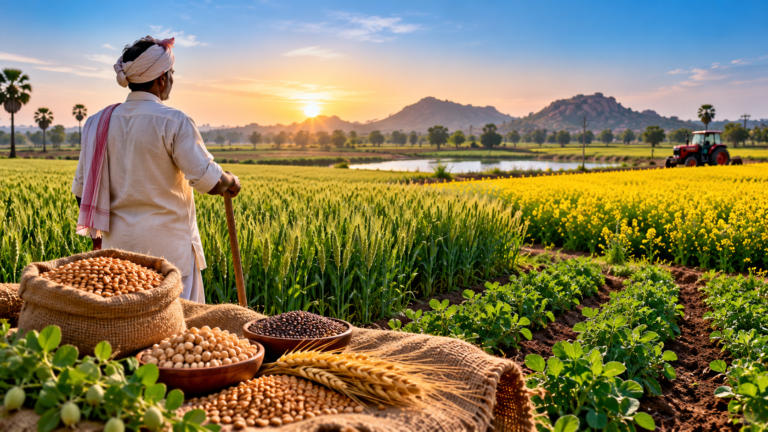
India’s wheat acreage could shrink 5–10% this winter as water shortages and a relatively small MSP increase prompt some farmers to consider other crops or leave fields fallow. Government stocks may cushion near-term supply risks.
India | October 13, 2026
India’s wheat acreage could decline by 5–10% during the 2026–27 winter sowing season as water shortages and farm economics influence crop choices, according to a report published by The Economic Times on October 13, citing executives from the wheat-processing industry. Some farmers may shift to crops that require less water or leave fields uncultivated where irrigation is inadequate.
The report identifies Rajasthan, Gujarat and parts of Madhya Pradesh and Maharashtra among the areas where wheat planting may be affected. The projected decline is an industry estimate, not a final government acreage assessment; actual sowing will depend on local water availability, weather, prices and decisions made during the planting window.
Why wheat sowing may fall
Below-normal rainfall in parts of the country has limited water available for irrigation. Wheat is a major winter crop, and farmers need to assess whether they can secure sufficient irrigation at the right stages of growth. The Economic Times also reported that the latest minimum support price increase for wheat was relatively small compared with increases for some other Rabi crops, potentially making pulses and oilseeds more attractive to some farmers.
Crop switching is not automatic or risk-free. Farmers must consider soil conditions, local climate, seed availability, procurement arrangements, market access and the likely cost and return of each alternative. The suitability of pulses or oilseeds varies by district and farm.
Could lower acreage push up wheat prices?
The Economic Times report said government wheat stocks were estimated at around twice the mandatory buffer requirement, which industry executives expect could help cushion the impact of lower sowing and limit near-term price pressure. That does not guarantee prices will remain stable: final production, procurement, consumption, exports and future weather will also matter.
What to watch next
- Official acreage data: Follow Agriculture Ministry updates as the Rabi sowing season progresses.
- Water availability: Reservoir levels, groundwater conditions and local irrigation access will shape planting decisions.
- Crop economics: MSP announcements, input costs and market prices may affect farmers’ crop choices.
- Government stocks and procurement: Public stock levels can influence the ability to manage supply disruptions.
For farmers, the immediate priority is to base sowing decisions on district-level water availability and agricultural-extension advice rather than a national estimate alone. For consumers, the projected acreage reduction is an early signal to monitor, not evidence by itself of an imminent shortage or price surge.
Source
Reporting note: The 5–10% decline is a forecast attributed to industry executives. It should not be interpreted as a final official estimate of India’s wheat acreage.
Related MarketNex coverage